
|
 |
 |
 |
 |
 |
 |
 |
 |
 |
 |
|
As the USS Bainbridge DD-246 was making her way through the Sea of Marmora on the morning of Dec. 16, 1922 nobody could know what was about to happen. A few miles behind the destroyer was the French transport ship Vinh-Long. Built in 1881 the 40 year old ship was a relic of days gone by still sporting masts and yards. She had been a hospital ship in the first world war and was being used as a troopship following the war. Lt. Commander Walter A. Edwards of the Bainbridge having been alerted to the ship in distress, turned his ship about and rushed to the burning vessel, he of course had no way of knowing there were nearly 500 lives hanging in the balance. With his ship standing off about 200 yards Edwards ordered his boats lowered and had them move toward the Vinh-Long. Edwards believed the fire was under control and would soon be put out since he could see many of the crew of the Vinh-Long engaged in controlling it. He also noted the several hundred people gathered on the bow seemed to be "perfectly calm and quite". Just before 7am the situation would change. At 06:55 a tremendous explosion rocked the Vinh-Long and all the calm and quiet people on the bow panicked, he stated that he saw over 150 jump overboard. As there were many civilians on board this could only be expected in the situation. Edwards noted that order had been lost and that a great loss of life was about to occur if something was not done immediately. Without regard to his own ship's safety Edwards moved the Bainbridge toward the Vinh-Long, stopping with his bow against the bow of the burning vessel. Lines were attached so that those on board could simply slide down on to the bow of the Bainbridge. A second explosion, believed to be the after magazine, occurred less than five minuets after Bainbridge tied off on the Vinh-Long followed by more explosions which lasted about 15 minuets. One of them caused the main mast to fall, fortunately it fell clear of the people in the water and the Bainbridge. At 07:20 the fire had reached the bridge and was completely out of control, the captain and remaining officers abandoned the ship in a launch. With the ship still burning Edwards attempted to take her in tow to beach her, but the captain of the Vinh-Long came alongside the Bainbridge and warned them that he believed the forward magazines would explode and told them to abandon the ship, which they did at about 07:45. By then a British destroyer HMS Sepoy had arrived on the scene and was asked by Edwards to relieve him, which they did. Edwards and the Bainbridge left the area and headed for Constantinople where the survivors were transferred to the French cruiser Waldeck-Rousseau later in the day. Because of the bravery of Edwards and the crew of the USS Bainbridge four hundred and eighty-one people had been saved. Sadly there were fourteen casualties, including two women and four children who had died in the fire. The others were killed while abandoning the ship or by a falling lifeboat, one man, a corporal, died on the Bainbridge from exposure. A great tragedy had been averted and Edwards was decorated for his part. He received the Medal of Honor from President Calvin Coolidge on Feb. 2, 1924, he was also awarded the French Legion of Honor and the Distinguished Service Order from the King of England. On June 19, 1942 a further honor was paid to him when a destroyer named in his honor was launched (USS Edwards DD-619). Lt. Commander Edwards died of an illness on Jan. 15, 1928 in Washington D. C. |
© 2007 Michael W. Pocock MaritimeQuest.com |
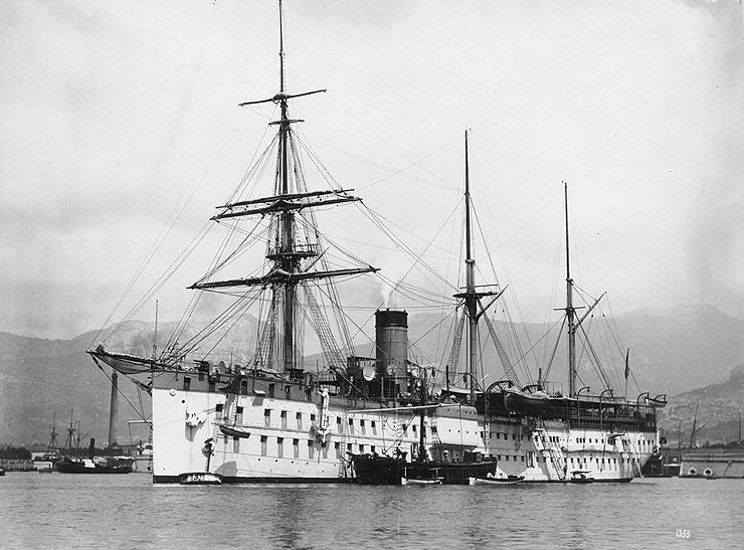 |
The Vinh-Long seen in the 1890's
|
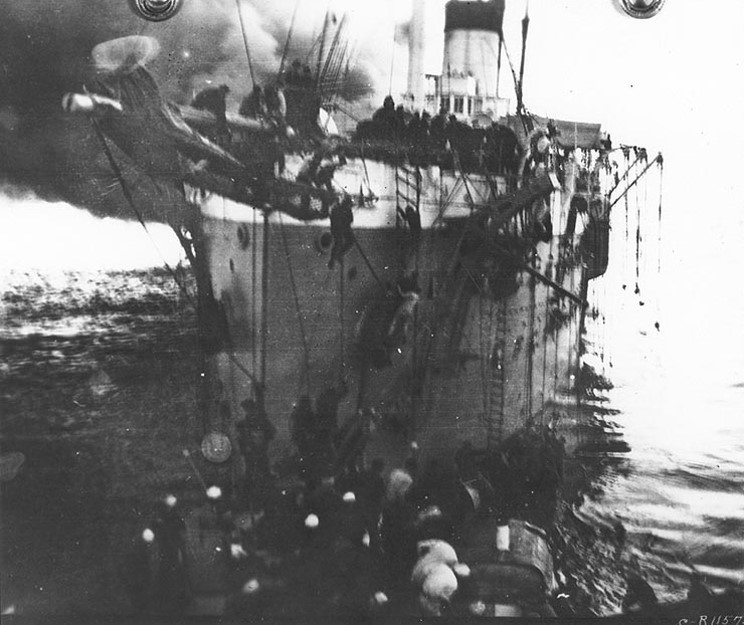 |
USS Bainbridge DD-246 rescuing survivors from the Vinh-Long.
|
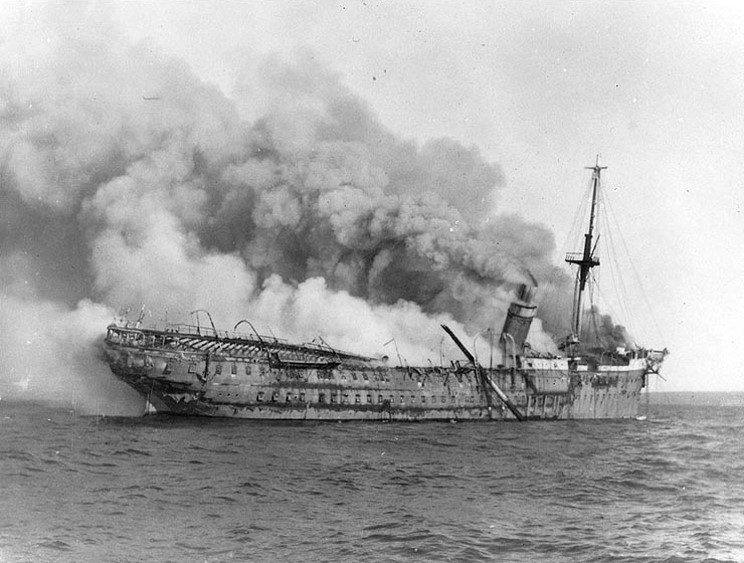 |
Vinh-Long burning.
|
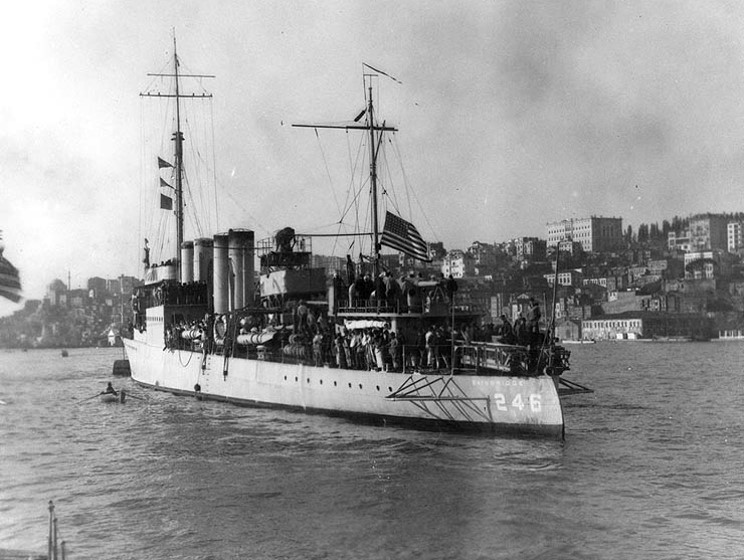 |
USS Bainbridge DD-346 at Constantinople, Turkey with the survivors of the Vinh-Long still on board.
|
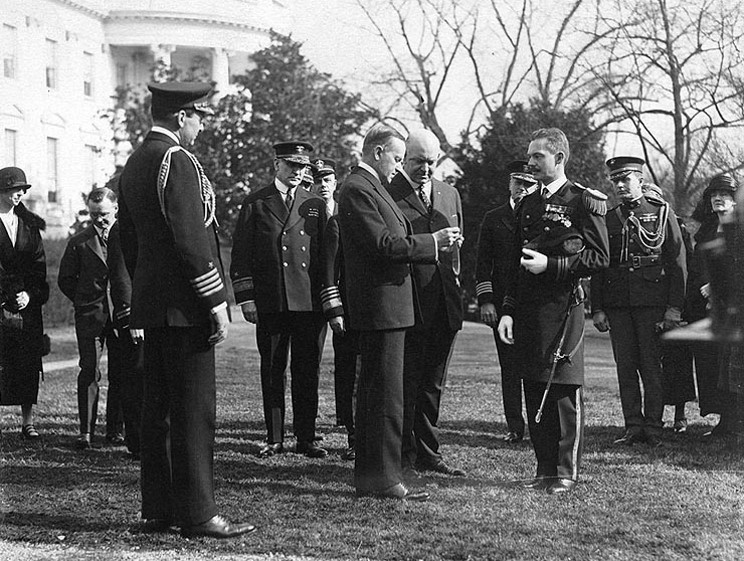 |
Feb. 2, 1924: President Calvin Coolidge about to present the Medal of Honor to Lt. Commander Edwards.
|
2006 Daily Event |
||