
|
 |
 |
 |
 |
 |
 |
 |
 |
 |
 |
|
June 13, 1943 The Coast Guard cutter Escanaba WPG-77 sank between Greenland and Newfoundland. The Escanaba was built by Dafoe Works, Bay City, Michigan. Launched Sept. 17, 1932 and commissioned into the Coast Guard on Nov. 23, 1932. Her dimensions were 165' x 36' displacing 1,005 tons. Her home port was Grand Haven, Michigan until she was transferred to convoy escort duty on Jan. 14, 1942. Escanaba was sent to Boston and used to escort convoys from the U.S., Nova Scotia and Newfoundland as far as Greenland and back. On June 15, 1942 she reported a target and proceeded to depth charge the area, making two passes the crew claimed they saw a submarine surface, roll over and sink. Soon a second target was located. They depth charged that as well. Also claiming to observe evidence that they had sunk a second submarine. Records captured after the war indicate no German U-boats were lost on that day in that area. Minuets after this attack a real U-boat struck, U-87 fired torpedoes at the convoy hitting the Cherokee and the Port Nicholson. Cherokee sank with the loss of 86 lives. The Port Nicholson sank the next day, 5 were killed. The Escanaba rescued survivors and landed them in Boston. Early in the morning of Feb. 3, 1943 Escanaba was on escort duty once again. This time convoy SG-19, Newfoundland to Greenland. A second cutter, the Comanche was also escorting the three ship convoy, Dorcester, Lutz and Biscaya. Out of nowhere an explosion on the Dorcester ripped through the night. The U-223 had fired a spread of torpedoes at the convoy and the only target hit was the worst possible for the Allies. Dorcester was a transport ship and was carrying 751 troops and passengers. In total 904 people were on board. The 5,649 ton ship sank in less than 30 minuets leaving hundreds in the water. The Escanaba and Cherokee moved in to rescue survivors. Many men from the Escanaba actually jumped into the freezing water, at the risk of their own lives, to rescue those too weak or injured to even climb a rope ladder. However the toll in lives was enormous, 675 people died that night including the ships master, 101 officers and men, 15 armed guards and 558 troops and passengers. The final chapter takes place June 13, 1943. While escorting convoy GS-24, Greenland to Newfoundland, the Escanaba exploded and sank in 3 minuets. To this day the cause of the blast has not been determined. It is possible she hit a mine or suffered an internal munitions explosion (like the USS Turner DD-648). It is also possible she was sent to the bottom by a torpedo. There were six U-boats known to be operating in the area at the time of the explosion. The records of the boats that returned from their patrols showed no record of having fired on a target that morning. However, two boats never returned to report their actions. The U-334 was sunk by the British the next day southwest of Iceland with the loss of all 47. (this boat sank two ships in the infamous attack on convoy PQ-17) And the U-388 was sunk by a U.S. Catalina aircraft also with the loss of the entire 47 man crew. So we may never know why the Escanaba sank. We do know that 101 brave men died that day. Most of these men had been involved in the rescue of the survivors of the Dorcester. There were only 2 survivors, Boatswain's Mate Melvin A. Baldwin and Seaman 1st Class Raymond F. O'Malley, Jr. |
© 2005 Michael W. Pocock MaritimeQuest.com |
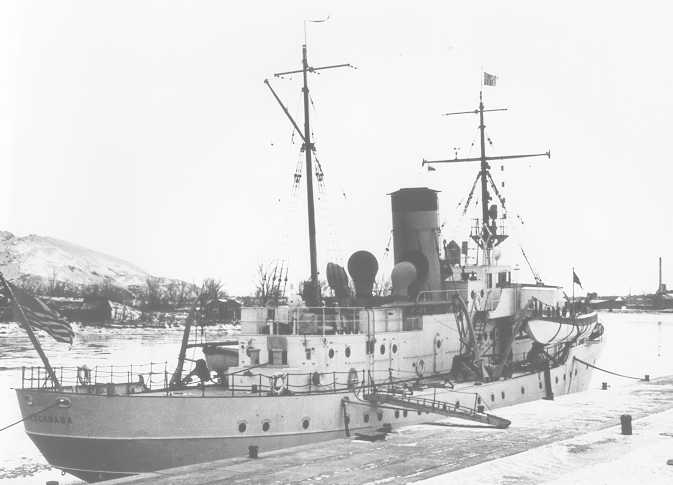 |
USCGC Escanaba WPG-77
|
Roll of Honor |
 |
In memory of those who lost their lives in USCGC Escanaba WPG-77 "As long as we embrace them in our memory, their spirit will always be with us" |
Name |
Rank / Rateing |
Notes |
|
Alston, Jr., John |
Radioman 3rd Class (USCGR) |
||
Anderson, Ralph A. |
Signalman 2nd Class (USCGR) |
||
Aridas, George |
Seaman 1st Class (USCGR) |
||
Arrighi, Richard A. |
Ensign (USCGR) |
||
Baths, William |
Yeoman 2nd Class (USCGR) |
||
Bauer, Norman M. D. |
Watertender 2nd Class |
||
Biggs, Melvin G. |
Seaman 2nd Class (USCGR) |
||
Bonham, Max A. |
Machinist's Mate 1st Class |
||
Brown, Oren E. |
Soundman 3rd Class (USCGR) |
||
Buddenhagen, Ray H. |
Machinist's Mate 2nd Class (USCGR) |
||
Bukes, Ted S. |
Radioman 3rd Class |
||
Burns, Thomas F. |
Signalman 2nd Class (USCGR) |
||
Bykowski, Raymond J. |
Coxswain |
||
Cameron, Jr., John D. |
Ensign (USCGR) |
||
Card, James F. |
Fireman 2nd Class (USCGR) |
||
Chapleau, Eugene G. |
Seaman 1st Class |
||
Chapman, Lyle T. |
Seaman 1st Class |
||
Christenson, Clarence E. |
Boatswain's Mate 2nd Class |
||
Chudacoff, Sam |
Yeoman 3rd Class (USCGR) |
||
Cilo, Jr., John |
Machinist's Mate 2nd Class (USCGR) |
||
Clark, Alfred E. |
Machinist's Mate 2nd Class (USCGR) |
||
Clark, Herman R. |
Soundman 2nd Class |
||
Corey, William H. |
Gunner's Mate 1st Class |
||
Counselor, Layton R. |
Chief Machinist's Mate |
||
Czelusniak, George J. |
Seaman 1st Class (USCGR) |
||
Davis, Daniel C. |
Ensign (USCGR) |
||
Davis, Jr., James F. |
Chief Yeoman (USCGR) |
||
Delsart, Leonard |
Radioman 1st Class |
||
** |
Deyampert, Warren T. |
Officer's Steward 2nd Class |
|
Dodgen, Paul C. |
Quartermaster 3rd Class |
||
Estocapio, Pedro A. |
Officer's Steward 2nd Class |
||
Farrar, Clarence A. |
Chief Machinist's Mate |
||
Ferris, Donald E. |
Watertender 2nd Class |
||
Foster, Charles R. |
Radioman 2nd Class |
||
Gadek, Eugene |
Radioman 1st Class |
||
Garcia, William C. |
Ensign (USCGR) |
||
Gatos, Lloyd J. |
Fireman 1st Class |
||
Gmeiner, George W. |
Seaman 1st Class |
||
Graham, Leroy J. A. |
Soundman 2nd Class |
||
Hawk, Arthur L. |
Seaman 2nd Class (USCGR) |
||
Hooper, Frank V. |
Electrician's Mate 3rd Class |
||
Hostak, Quirin |
Seaman 1st Class |
||
Hunt, John N. C. |
Lieutenant |
||
Jarousky, Phillip |
Watertender 1st Class |
||
Johns, Floyd R. |
Seaman 2nd Class (USCGR) |
||
Kenney, Joseph P. |
Seaman 2nd Class (USCGR) |
||
Kletzien, Kenneth A. |
Soundman 2nd Class |
||
Kucia, Edward J. |
Watertender 2nd Class |
||
Kurcz, Stanley J. |
Radioman 1st Class |
||
Larson, George W. |
Chief Boatswain's Mate |
||
Layton, Clyde |
Chief Boatswain's Mate |
||
Leitz, Ralph F. |
Seaman 1st Class |
||
Lobosco, Angelo F. |
Seaman 1st Class |
||
Londo, Jr., Victor J. |
Watertender 1st Class |
||
Lucas, Joseph W. |
Ship's Cook 1st Class |
||
McCarthy, Barton |
Gunner's Mate 3rd Class |
||
McCready, Robert G. |
Signalman 2nd Class (USCGR) |
||
McGehearty, Robert E. |
Ensign (USCGR) |
||
McGowan, Ralph |
Seaman 1st Class (USCGR) |
||
Menkol, Theodore T. |
Gunner's Mate 2nd Class |
||
Meyers, John B. |
Ship's Cook 2nd Class |
||
Mickle, Charles R. |
Chief Watertender |
||
Mohler, Malcolm E. |
Watertender 2nd Class |
||
More, Sidney A. |
Sonarman 3rd Class |
||
Neale, Arthur F. |
Radioman 3rd Class (USCGR) |
||
Nilsen, Roy |
Seaman 1st Class (USCGR) |
||
Nix, Dr. Ralph R. |
Assistant Surgeon |
US Public Health Service |
|
Nowakowski, Bronislaw |
Seaman 1st Class |
||
O'Leary, Walter F. |
Seaman 1st Class |
||
Palser, Hugh |
Quartermaster 1st Class |
||
Paolella, Valentino N. |
Seaman 1st Class |
||
* |
Peterson, Carl U. |
Lt. Commander |
Commanding Officer |
Peterson, Leo R. |
Coxswain (USCGR) |
||
** |
Prause, Jr., Robert H. |
Lieutenant |
|
** |
Rednour, Forrest O. |
Ship's Cook 2nd Class |
|
Rice, James J. |
Storekeeper 2nd Class (USCGR) |
||
Rowland, Robert H. |
Soundman 3rd Class |
||
Ruidl, Patrick C. |
Radarman 3rd Class |
||
Salm, Victor N. |
Carpenter's Mate 3rd Class (USCGR) |
||
Salter, Claud A. |
Chief Boatswain's Mate |
||
Sattler, Kenneth E. |
Radioman 1st Class |
||
Sickles Jr., Frank E. |
Seaman 1st Class |
||
Skarin, Clifford B. |
Yeoman 2nd Class (USCGR) |
||
Smith, Clayton R. |
Seaman 1st Class |
||
Somes, Thomas B. |
Quartermaster 1st Class |
||
Sommers, Joseph C. |
Seaman 1st Class |
||
Sullivan, James |
Lieutenant (j.g.) (USCGR) |
||
Swander, Dwight E. |
Radioman 2nd Class |
||
Teschendorf, Leo L. |
Chief Machinist's Mate |
||
Thoman, William P. |
Lieutenant (j.g.) |
||
Tierney, William C. |
Pharmacist's Mate 2nd Class (USCGR) |
||
Tillett, Jr., Thomas |
Mess Attendant 2nd Class |
||
Treadwell, Jesse C. |
Lieutenant (j.g.) (USCGR) |
||
Tyrus, Earl J. |
Mess Attendant 2nd Class (USCGR) |
||
Welsh, Dean M. |
Carpenter's Mate 1st Class |
||
Wetmore, Jr., Edward V. T. |
Fireman 2nd Class (USCGR) |
||
Widman, Axel V. W. |
Radarman 3rd Class (USCGR) |
||
Wilkins, Woodrow W. |
Ensign (USCGR) |
||
Williams, Jr., Samuel |
Mess Attendant 1st Class |
||
York, Clyde B. |
Motor Machinist's Mate 1st Class |
||
Yurik, Victor |
Fireman 2nd Class |
||
* |
Awarded Legion of Merit (Posthumously). |
||
** |
Awarded Navy and Marine Corps Medal (Posthumously). | ||
To submit a photo, biographical information or correction please email the webmaster. |